Context
The Jukebox was another three-paper project in Term 2 of my first year: Contextual Studies (BMD1R3), Photographic Studies (BMD1R4) and Digital Image Foundation (BMD1R5). Every photo had to be my own, shot in RAW, then manipulated into the final designs. My top three picks from the list were Reo Tōtahi by Mokotron, Corporate Cannibal by Grace Jones and O Superman by Laurie Anderson.
Mokotron is Dr Tiopira McDowell (Ngāti Hine, Ngāpuhi), an Auckland producer, DJ and University of Auckland lecturer who teaches Māori history and culture. His music is built on heavy breakbeats and deep sub-bass from underground sound-system and rave culture. For him the classroom and the club aren’t separate things. He uses both to talk about Māori resistance, land sovereignty and historical grief.
Reo Tōtahi means “one voice”. The lyrics take on racism towards te reo Māori (“belittling my language, causing it to diminish”) and throw it back: “my language is the remedy, yours is the sickness” and “send that language back to Britain.” It’s not meant to be a comfortable club track. It’s a protest.
Why I picked it
I chose Reo Tōtahi because out of my three picks it was the track that stood out to me most musically. I wanted to work with something high-energy, but after looking into the themes I realised it also covers a really heavy topic: confronting systemic racism and the suppression of indigenous voices. I wanted to use my design work to explore ways of visually communicating those heavy, confrontational ideas.
My process
Mokotron, the lyrics in translation, the history of album art and two cover reviews.
Who would actually listen to this, a persona, and the ethics of the subject.
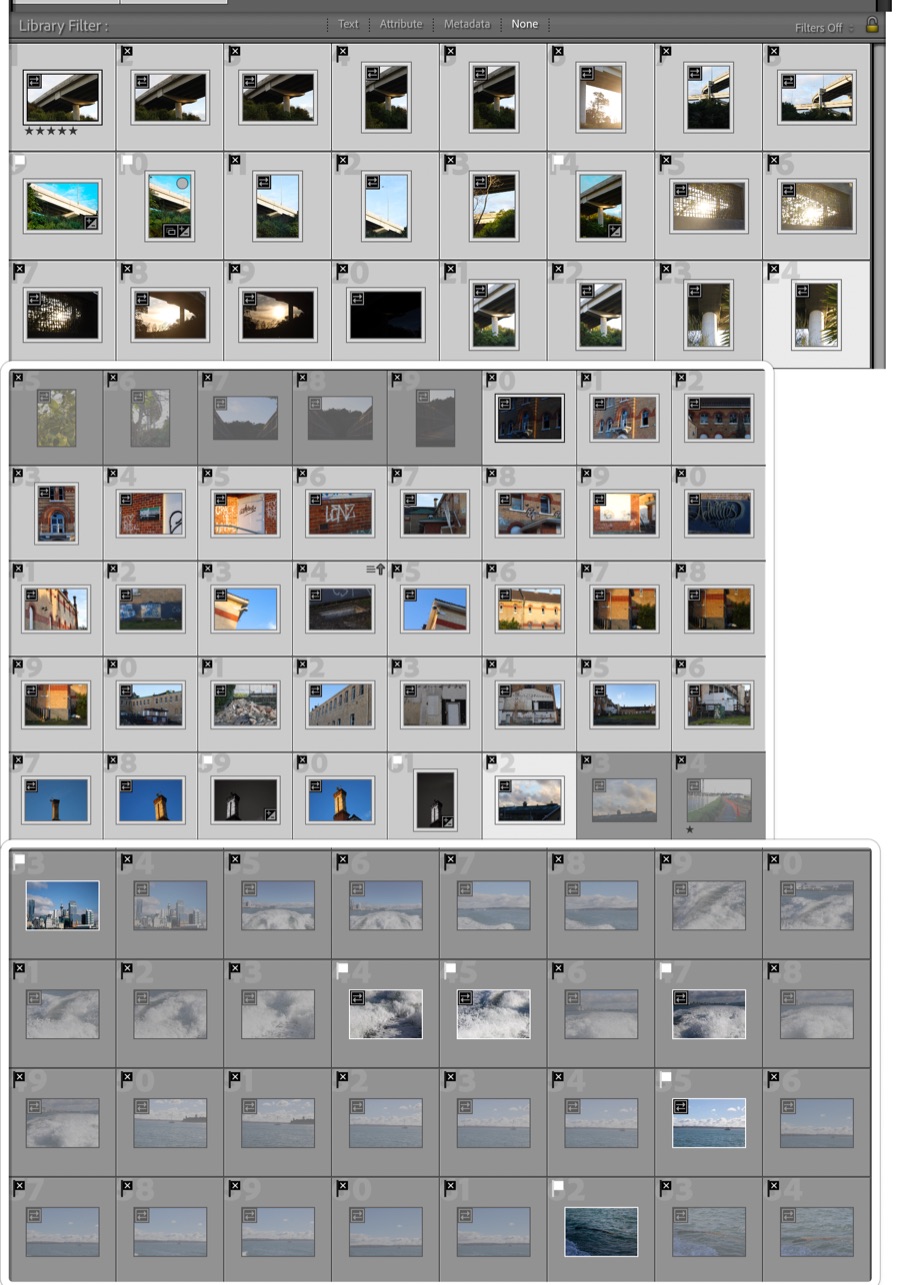
A shooting plan, then a RAW shoot around gritty, industrial parts of the city.
The cover, label, A1 poster, animated social post, mockups and a final pitch.
Showing the establishment, then breaking it
My two moodboards set up the tension the whole design had to hold.
- The establishment. For the photography I wanted gritty, industrial locations and cold concrete. Brutalist walls and heavy infrastructure to symbolise institutional power and cold authority.
- Breaking it. For the graphics I wanted traditional Māori patterns cutting through, or carved right into, that cold concrete imagery.
- The audience. People into underground electronic music and sound-system culture who are politically aware and support indigenous arts and sovereignty movements. Not mainstream radio listeners.
Carving, harsh light and one red
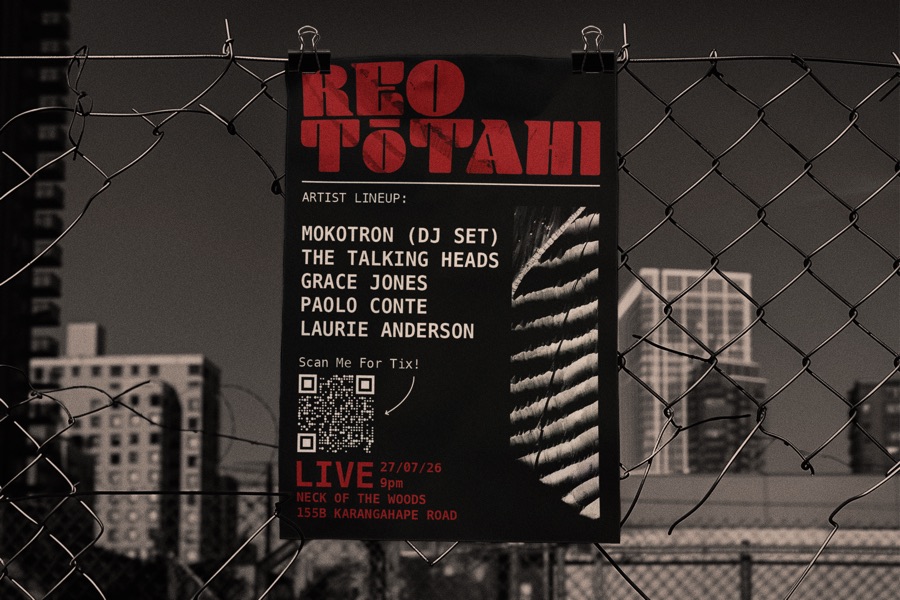
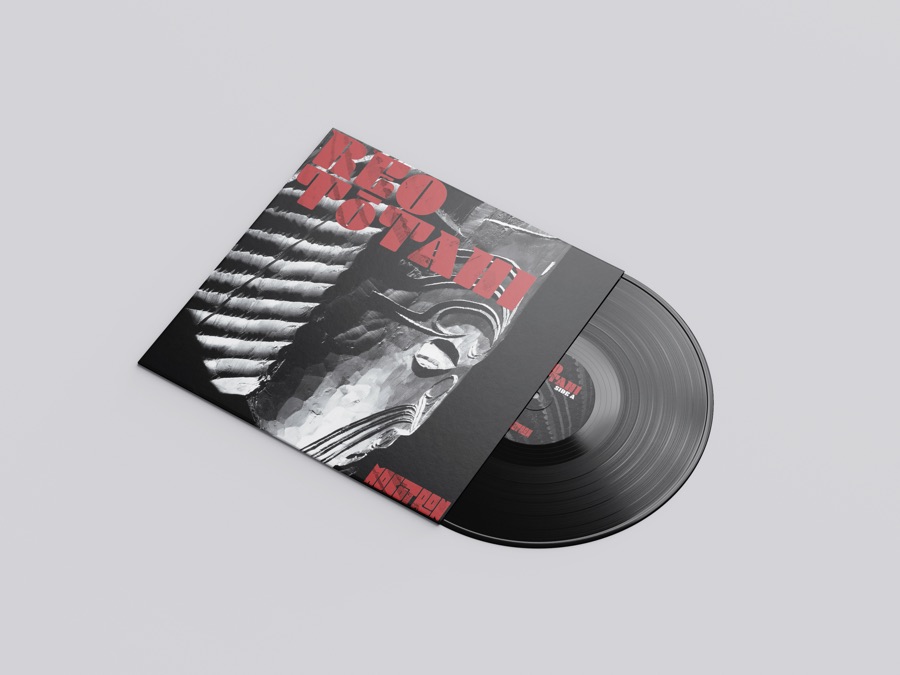
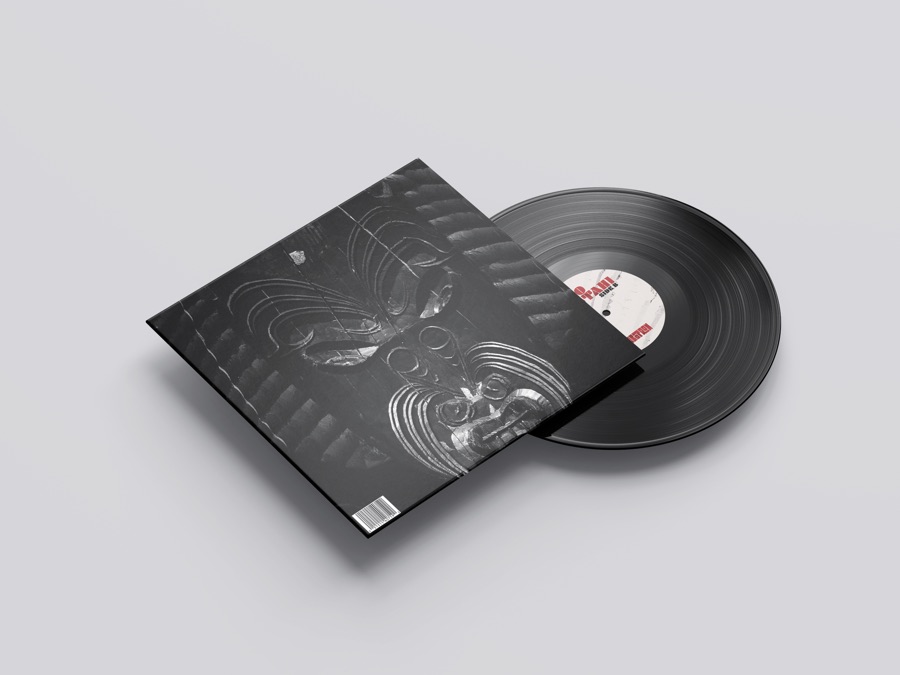
The cover crops in on a carved face with hard stripes of light across it. REO TŌTAHI is stacked in a heavy, scratched-up red display face with MOKOTRON along the bottom. The back of the sleeve is a full carved panel, and the label uses the same red type on marbled white. From my poster research I wanted to carry a few things over from the record to the gig poster: a strict, limited palette, strong high-contrast imagery and a clean use of negative space, with the type feeling like part of the artwork instead of slapped on top. The A1 poster reuses the striped light photo next to a mono lineup and a QR code for tickets, so it’s obvious it belongs with the record.
Covers I looked at
I researched the history of album art, from plain shellac record sleeves to Alex Steinweiss designing the first illustrated covers at Columbia Records. I also reviewed Random Access Memories by Daft Punk and The Fat of the Land by The Prodigy. The Prodigy cover has a lot in common with Mokotron, with heaps of movement, high contrast and an abrasive sound, but their motives sit at opposite ends of the political spectrum. The Prodigy album is an aggressive, chaotic shrug at a boring society, while Mokotron’s music is about cultural preservation, challenging colonial systems and defending indigenous identity.
The single
What I made
Single cover
Front and back sleeve artwork for the vinyl.
Label
Side A and B labels to go with the cover.
Gig poster
A1 (594 × 841 mm), for bus stops and street posters.
Animated social post
15 seconds with my own sound edit. I spliced eight beats from the chorus, reversed a sweep from Waerea (another track on the album) to use as a riser, and ended on a recording of the extinct Kauaʻi ʻōʻō bird. It’s a single voice calling out with no response, which I think parallels how Māori culture is treated in the current political landscape.